
Welding and Fabrication: A Tool That Works as Part of the Bigger Picture
When people hear welding services, they often picture a shop that does one thing: takes in parts and welds them together. That’s a real business model — but it’s not how Beacon works.
At Beacon Metal Fabricators, welding is one of the foundational tools we use to deliver custom metal fabrication solutions. It works alongside laser cutting, bending, drafting, fixtures, and finishing to help us take an idea — sometimes nothing more than a sketch — and turn it into a finished product that does exactly what it’s supposed to do.
We don’t build our work around welding. We use welding to build better work.
Where Welding Fits at Beacon
Most of the time, welding is one step in a larger fabrication process. A part gets cut, then bent, welded, assembled, and finished — often all under one roof.
Sometimes welding is the primary operation. Other times, it’s the final step that brings everything together.
What matters is how it’s applied.
We’re not a shop that specializes in accepting pallets of pre-made parts for assembly-only welding. Welding at Beacon is part of manufacturing. It’s informed by material selection, joint design, downstream fabrication, and real-world use — not just by what’s fastest or most familiar.
That context is what makes the difference.
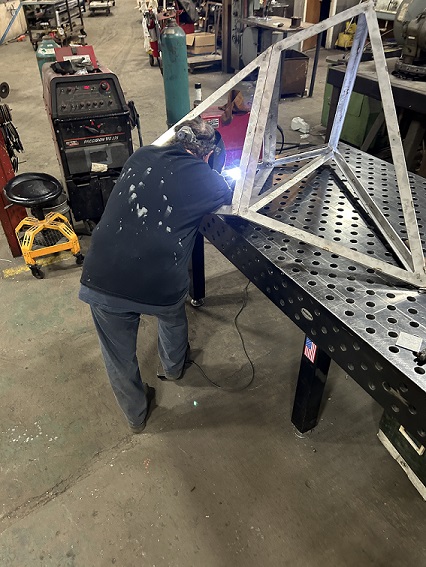
Experience Drives Every Welding Decision
Welding is never one-size-fits-all. The right approach depends on the material, the thickness, the application, and the end requirement.
After more than 30 years in custom fabrication, we’ve seen and done a lot. That experience shows up in the decisions we make before a weld ever happens:
- Selecting the correct welding process for the job
- Preparing materials so they weld properly
- Understanding when codes or customer standards apply
- Knowing why a weld needs to be done a certain way — not just how
Whether the job calls for a skilled TIG welder working on thin stainless, a production-efficient MIG weld for structural components, a stick welder handling heavier steel, or a carefully planned approach to resistance welding for sheet metal assemblies, those decisions come from experience — not guesswork.
We’re comfortable working within AWS, ANSI, or customer-specific guidelines when they’re required. And when they aren’t, we know how to deliver the same performance without overcomplicating the process.
That judgment saves time, saves money, and leads to better results.
A Team Built for Custom Work
Custom fabrication demands flexibility — and that starts with the people.
Beacon’s welding team brings together a wide range of backgrounds:
- Thin-metal specialists with auto body experience
- Welders from semi-production and production environments
- Aluminum-focused welders, especially for thinner materials
- Fabricators skilled in fixtures and repeatability
- Experience gained across decades and generations of metalwork
Many of our welders spent years doing production-level work — welding the same parts day in and day out. That experience builds consistency and efficiency. At Beacon, we apply that production discipline to a very different challenge: producing many different parts, across materials and processes, often in short runs.
That’s especially important on jobs involving stainless steel welding or aluminum, where understanding heat input, distortion, and material behavior matters just as much as the weld itself.
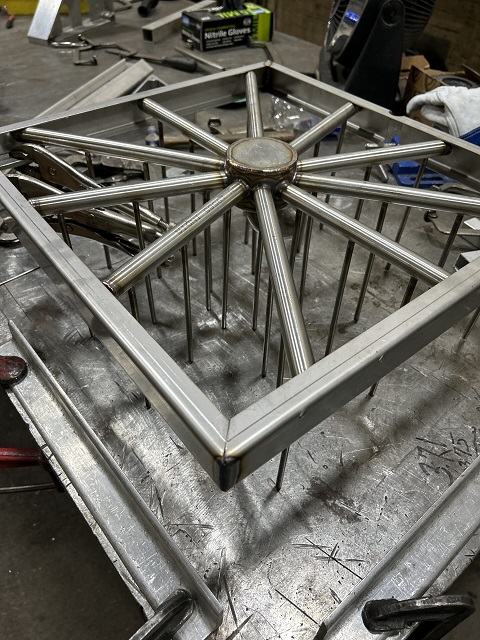
Consistency Without Becoming a Production Shop
Repeatability matters — even in short runs.
When a project calls for more than a handful of identical parts, properly designed fixtures help ensure components fit together correctly and assemble the same way every time. This allows us to balance quality and efficiency without forcing customers into production-style tooling or minimums.
It’s how ten parts can look like they came from the same place — without turning Beacon into a production facility.
Clearing Up the Certification Question
Welding certifications aren’t universal — and that’s something a lot of people don’t realize.
Certifications are specific to the company, the process, the material, the position, and the application. A welder certified at one shop isn’t automatically certified at another. What does carry over is experience, education, and judgment.
Every welder here has passed prior certifications at some point in their career. When a project requires specific certification, we’re able to:
- Select the appropriate welders
- Perform in-house testing
- Coordinate third-party inspection and documentation
- Certify welders to the requirements of that specific job
Not every project needs certified welding — but when it does, we’re equipped to handle it properly.
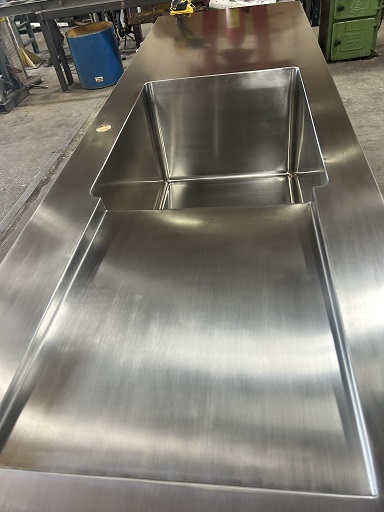
Capability, Equipment, and Knowing the Limits
Our shop is equipped to perform MIG, TIG, stick, and spot welding across a wide range of materials.
Within our normal working ranges, welding is a non-issue:
- Mild steel up to approximately ½ inch thick
- Stainless steel up to approximately ¼ inch thick
- Aluminum, stainless, and steel beyond those ranges as needed — within reason
Aluminum, in particular, requires a different mindset. Anyone can look up how to weld aluminum — but doing it well, especially on thinner materials and custom parts, comes from experience with heat control, joint prep, and sequencing.
There are practical limits driven by equipment capacity and material handling. When parts become too heavy to move safely, we’re honest about it. Staying within our wheelhouse protects quality, safety, and outcomes.
If you can’t move it, you can’t weld it — and we don’t pretend otherwise.
How Welding Creates Real Value
A big part of our role is education.
Customers sometimes come in with a clear idea of how something needs to be welded. Often, we can suggest an alternative approach that delivers the same — or better — performance with less cost or complexity.
That corrective guidance is where experience really pays off.
At the same time, when a customer or engineer calls out a specific weld or joinery method, we’re fully capable of meeting that requirement within the guidelines provided — whether that involves MIG, TIG, stick, or resistance welding.
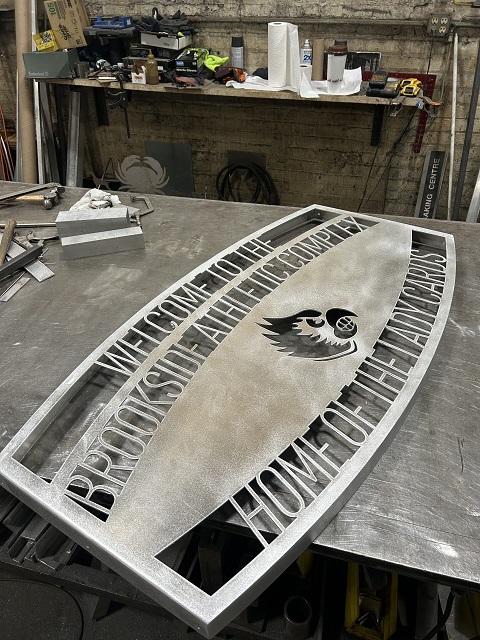
Welding as a Tool — Not the Goal
Custom metal fabrication produces a huge variety of final products. No single process defines the work.
Welding is one of the tools in our toolbox — a critical one — but it’s always in service of the bigger picture: delivering a finished, functional product that meets technical requirements and fits the customer’s needs.
That’s what welding looks like at Beacon. Not as a standalone service, but as an essential part of how we solve problems and build custom metal solutions every day.
To learn more about how our flexible welding capabilities can help bring your fabrication vision to life, contact Beacon Metal Fabricators today.
Reach Out Today
Call, email, or use the form below to send us your specs, and let’s get started